10 Stair Railing Tips for Global Buyers

Buying a stair railing for an international project involves more than choosing an attractive design. It requires careful attention to safety, materials, measurements, installation, and long-term performance. A railing that looks suitable online may not fit a curved staircase, local building requirements, or the daily needs of its users. These details matter.

This guide shares practical stair railing tips for global buyers, based on common purchasing challenges and professional quality checks. It explains how to compare stainless steel, aluminum, wood, glass, and hybrid systems. It also considers handrail height, post spacing, corrosion resistance, packaging, and replacement parts. Small details can prevent expensive delays.

Ask for precise drawings.

Do not rely on photographs alone. Request material grades, surface treatments, load information, installation instructions, and relevant test reports. Experienced suppliers should explain what their products can and cannot support. They should also clarify whether their stated measurements include brackets, connectors, and wall gaps.

Global purchasing is rarely perfect. A supplier may provide clear documents but still overlook a small fitting. A buyer may measure carefully and miss an uneven landing. These mistakes deserve honest review, not quick blame. Confirm every critical dimension before production, and request a sample when the project allows it.

Local professionals should verify site conditions and applicable requirements. Rules differ between countries, regions, and building types. This article does not replace qualified engineering or local compliance advice. Instead, it offers a reliable framework for asking better questions, comparing suppliers fairly, and selecting a stair railing that remains safe, practical, and visually consistent over time.
10 Stair Railing Tips for Global Buyers

Understanding Stair Railing Types and Global Buyer Requirements

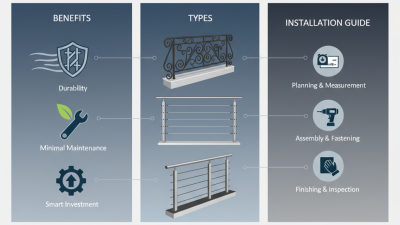
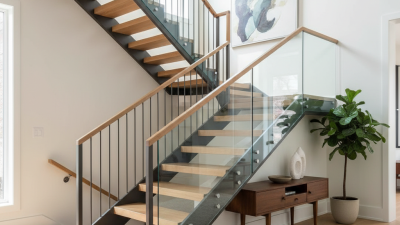
Stair railing decisions begin with type, not appearance. Common options include wall-mounted handrails, guardrails with vertical balusters, glass panels, cable systems, and continuous railings. Each type serves different spaces and installation conditions. A glass panel may suit a modern hotel, while vertical balusters often fit family housing and reduce climbing risks. Cable systems need careful tension control. They can look simple, but installation is rarely simple.

Global buyers must check local building codes before confirming a design. Requirements may cover railing height, baluster spacing, handrail diameter, load resistance, accessibility, and fire performance. These rules differ between countries and sometimes between cities. Ask for technical drawings, material certificates, test reports, and installation instructions. Do not rely on product photos alone. A beautiful sample can still fail a site inspection.

Material selection also depends on climate and maintenance plans. Stainless steel performs well in many humid areas, but coastal locations may require stronger corrosion protection. Timber feels warm, yet it needs stable moisture control and regular finishing. Measure stair width, landing length, fixing points, and wall strength on site. Small errors become expensive during shipping or installation. I have found that buyers often focus on price first. That approach needs reconsideration. Packaging, spare fittings, replacement access, and installer skill can affect the real cost more than the initial quotation. Check tolerances carefully. They matter.

Checking Safety Codes, Load Ratings, and International Certifications

Global buyers should treat stair railing compliance as a project requirement, not a paperwork detail. Safety codes differ by country, region, and building type. Confirm required railing height, opening limits, handrail shape, and stair geometry with the local authority. A product can pass one market’s rules and fail another’s.

Tip: Request the complete test report, not only a certificate image. Check the testing standard, laboratory name, test date, product model, and measured results. Load ratings should state the force direction, test position, and safety factor. In real use, people may push sideways, lean suddenly, or carry heavy objects near the railing. Static strength alone may not reflect every situation.

Tip: Verify international certifications carefully. There is no single certificate accepted everywhere. Look for recognized standards, accredited laboratories, traceable batch records, and installation instructions. Ask whether certification covers the entire railing system, including posts, brackets, fasteners, and joints. One overlooked component can weaken an otherwise strong design.

Tip: Inspect the installation environment before ordering. Coastal air, freezing temperatures, and frequent cleaning can accelerate corrosion. I have seen attractive railings develop loose connections after poor site preparation. The mistake is easy to make. Match materials to local conditions, confirm wall or floor strength, and keep written inspection records. When documents conflict, pause the purchase and seek advice from a qualified local engineer.

10 Stair Railing Tips for Global Buyers — Checking Safety Codes, Load Ratings, and International Certifications
No. Safety Check Key Requirement or Reference Documents or Test Evidence to Request Recommended Buyer Action
1 Confirm the governing building code Stair and guard requirements are jurisdiction-specific. Common references include the International Building Code (IBC), International Residential Code (IRC), EN 1991-1-1, and national or local construction regulations. The applicable rule depends on the building type, occupancy, location, and installation authority. Written confirmation from the project architect, building control authority, or code consultant; applicable code edition and project specification. Identify the final installation country and city before approving the design or placing an order.
2 Separate handrails from guards A handrail is intended to be grasped while using stairs, whereas a guard protects people from falling at open sides. Some codes require both functions, particularly where the stair is open or elevated. Their height, continuity, graspability, and structural requirements may differ. Dimensioned drawings showing handrail height, guard height, returns, terminations, and support locations. Ask the supplier to label every component as handrail, guard, baluster, post, bracket, or infill.
3 Verify guard and baluster openings Many residential codes limit openings in guards so that a prescribed test sphere cannot pass through; a widely used residential benchmark is a 4-inch (102 mm) sphere restriction, but commercial, childcare, and other occupancies can require different limits. Infill layout, maximum clear-opening calculation, and an opening test report when required by the authority. Check the largest opening at every location, including triangular spaces near stair treads and landings.
4 Check the complete load path The rail, posts, brackets, fasteners, base material, and supporting structure must transfer horizontal and vertical loads safely. A strong rail cannot compensate for weak anchors, thin substrates, or inadequate edge distances. Structural calculations, connection details, anchor specifications, substrate assumptions, and installation torque or embedment requirements. Have a qualified engineer verify the entire assembly rather than reviewing the rail section alone.
5 Request project-specific load ratings Load requirements vary by code and occupancy. For example, U.S. IBC provisions commonly use a 50 lbf (0.22 kN) concentrated load for handrails and a 200 lbf (0.89 kN) concentrated load for guards, with additional distributed-load provisions. These values must not be treated as universal requirements for every country or project. Signed structural calculations or test reports stating load direction, load location, loading duration, deflection criteria, specimen configuration, and pass/fail limits. Compare the supplier’s rating with the exact local code, occupancy category, and engineer’s specification.
6 Validate material and corrosion resistance Material selection should match exposure conditions. Stainless steel grades, coated carbon steel, aluminum, and timber have different strength, durability, and maintenance characteristics. Coastal, humid, industrial, and de-icing-salt environments require additional corrosion review. Material certificates, alloy or grade declaration, coating system specification, thickness data, and corrosion-resistance test results where specified. Specify indoor, outdoor, coastal, or industrial exposure and require a documented maintenance schedule.
7 Check slip, snag, and graspability risks Handrails should provide a continuous, comfortable grip and should not contain sharp edges, hazardous projections, or features that catch clothing. Finishes should remain secure and surfaces should not create unnecessary slip hazards during normal use. Profile drawings, edge-radius details, finish specifications, sample inspection records, and photographs of assembled joints and terminations. Inspect a physical sample or production mock-up, especially for joints, returns, welds, and end caps.
8 Review international certifications correctly Certifications are valid only for the stated product, factory, test method, and scope. ISO 9001 generally addresses quality-management systems; it does not by itself prove that a railing meets structural or building-code requirements. CE marking, where applicable, must correspond to relevant European Union legislation and a valid declaration of conformity. Certificate number, issuing body, scope, validity date, product model or family, test standard, declaration of conformity, and traceable factory information. Verify certificates with the issuing organization and confirm that they cover the supplied configuration.
9 Control dimensions and installation tolerances Stair geometry, landing dimensions, rail height, post spacing, fixing positions, and clearance to adjacent surfaces must match the approved drawings. Field conditions can change the required post locations and anchor performance. Shop drawings, stair survey dimensions, installation manual, allowable tolerances, drilling templates, and a replacement-parts list. Complete a site measurement and approval of shop drawings before fabrication or shipment.
10 Plan inspection, traceability, and maintenance Safe performance depends on correct installation and ongoing inspection. Critical items include loose fasteners, cracked welds, corrosion, coating damage, movement, and deterioration of the supporting substrate. Inspection intervals should reflect use and exposure. Installation checklist, batch or lot traceability, torque records, inspection procedure, warranty terms, maintenance instructions, and nonconformance process. Define acceptance criteria, appoint a competent inspector, and retain records for the full service life.

Selecting Materials, Finishes, and Designs for Different Environments

10 Stair Railing Tips for Global Buyers

Selecting a railing for another climate requires more than matching a catalogue image. The 2024 Global Status Report for Buildings and Construction states that buildings use about 32% of global energy and produce 34% of global carbon emissions. Choose durable materials that reduce replacement work. In humid coastal areas, specify marine-grade stainless steel, sealed aluminum, or properly protected steel. Check fasteners carefully. Salt reaches hidden joints first. In dry, dusty regions, textured finishes may hold dirt, while smooth powder-coated surfaces clean more easily. For cold climates, avoid finishes that become brittle under repeated freezing and thawing.

Design must also fit local use. The International Building Code and EN 1991 provide useful load guidance, but local approval remains essential. Measure hand clearance, baluster spacing, landing width, and fixing depth. A beautiful glass panel is not automatically safe. Tempered or laminated safety glass, tested hardware, and visible edge protection matter. The International Association of Certified Home Inspectors reports that loose or missing handrails are common residential safety concerns. Small details matter.

Experience changes decisions. I once favored a dark matte finish for a dusty site; fingerprints and sand made maintenance harder. A lighter satin finish worked better. Ask for salt-spray, abrasion, UV, and freeze-thaw test records. Request installation drawings in the buyer’s language. Confirm replacement-part availability before ordering. Do not trust “rust-proof” claims without test conditions. That wording is often too vague. Respect local building rules, accessibility needs, and cleaning practices. A railing should survive the environment, not only the showroom lighting.

Measuring Stairways and Confirming Installation Compatibility

10 Stair Railing Tips for Global Buyers

Accurate measurements decide whether a stair railing fits safely or becomes an expensive return. Measure the full stair width, not only the visible walking line. Record each tread depth, riser height, total run, and stair angle. Small differences matter.

Use a steel tape and a level when possible. Check the top and bottom landings carefully. Note nearby walls, doors, trim, and ceiling clearance. A railing may fit the stairs but block a doorway. It happens. I once measured between finished surfaces before the flooring was installed, and the final clearance was too tight.

Confirm the mounting surface before ordering. Concrete, masonry, timber, and metal framing require different anchors and installation methods. Locate studs or structural supports instead of relying on decorative panels. Send a simple drawing with dimensions, photos, post locations, and the intended handrail height. Include the direction of travel. Confirm whether the supplied design allows field adjustment for uneven walls or small angle changes. Many products have limited tolerance. Current local building requirements may control height, spacing, load resistance, and returns, so a qualified local installer should review the plan. Requirements differ between countries and sometimes between municipalities. Also check access for tools, delivery size, and assembly space. A perfect measurement is useless if installers cannot position the largest component safely.

Comparing Suppliers, Costs, Shipping, and After-Sales Support

10 Stair Railing Tips for Global Buyers

Compare more than the factory price. A railing quote should separate material, fabrication, packaging, inspection, and installation guidance. Stainless steel, aluminum, and powder-coated steel carry different maintenance costs. Ask for drawings, load-test records, surface-finish samples, and replacement-part prices. A cheaper quote may exclude brackets, protective film, or export packaging. That is where budgets become uncomfortable. Request at least three comparable offers with identical specifications and delivery terms.

Shipping deserves equal attention. UNCTAD’s Review of Maritime Transport reports that ships carry over 80% of global trade by volume. Yet freight charges, port fees, insurance, and customs handling vary by route and season. Compare total landed cost, not only the product invoice. The World Bank’s 2023 Logistics Performance Index evaluates 139 economies through customs, infrastructure, tracking, and timeliness. Use those factors when judging a supplier’s delivery promises. Confirm carton dimensions, pallet limits, container loading plans, and responsibility for damage claims.

After-sales support is measurable, not decorative. Ask how quickly technical questions receive answers and how defective parts are replaced. Require a written warranty, installation manual, inspection checklist, and spare-parts process. A supplier should explain whether replacements ship by air or sea. That difference can affect a construction schedule by weeks. I would also test one small order before committing to volume. It is not perfect, and one shipment cannot prove everything, but it exposes weak packaging, unclear instructions, and slow communication early. Supplier audits, independent inspection, and dated production photos add useful evidence without replacing practical judgment.

This website uses cookies to ensure you get the best experience. By continuing to browse on this website, you accept the use of cookies for the above purposes.