What Is the Best Birch Plywood for Global Buyers in 2026?

What Is the Best Birch Plywood for Global Buyers in 2026? The answer is not a single factory name or thickness. It depends on the project, destination, climate, and required surface quality. A cabinet maker in Toronto needs different performance from a construction buyer in Singapore. Moisture, temperature changes, machining, and shipping conditions all matter.

Metsä Wood plywood specialist Jussi Äijälä explains, “The best birch plywood is selected by performance, not by appearance alone.” This practical view deserves attention. A clean, pale face may look excellent under warehouse lighting. However, hidden voids, uneven veneers, or weak bonding can appear after cutting. Small details become expensive problems.

This guide examines the features global buyers should check in 2026. These include veneer quality, core construction, glue durability, thickness tolerance, formaldehyde class, certification, and packaging. A reliable supplier should provide clear technical data, batch information, and test documentation. Samples should be inspected before large orders. Trust, unfortunately, cannot be packed into a container.

Buyers should also compare the full cost. A cheaper panel may create more waste, slower machining, or higher replacement risk. That calculation is often missed. I have seen attractive quotations lose their value after warped sheets arrived at the workshop. The strongest choice balances price, consistency, compliance, and after-sales support. Even experienced purchasers should leave room for doubt and verify every important claim.
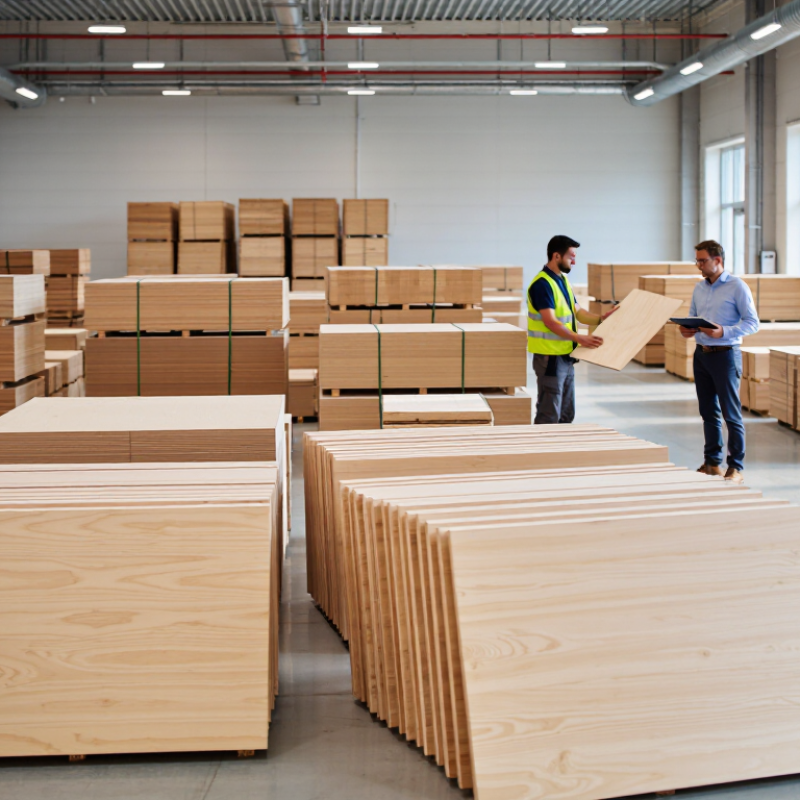
What Is the Best Birch Plywood for Global Buyers in 2026?

Birch Plywood: Definition, Structure, and Core Applications

Birch plywood is an engineered wood panel made from thin birch veneers bonded in alternating directions. This cross-laminated structure improves stability, strength, and screw-holding performance. Most panels show a pale, even surface with a fine grain. The edge reveals many compact layers, often creating a clean striped appearance.

That detail matters.

In workshop inspections, I check veneer alignment, core gaps, sanding quality, and thickness tolerance before approving a panel. Smooth faces can mislead. A beautiful surface may hide weak inner layers or uneven bonding. Core composition also affects machining, especially during CNC cutting, drilling, and edge routing. Buyers should examine samples from several sheets, not only one display piece.


Birch plywood supports furniture, cabinetry, drawer boxes, wall panels, shop fixtures, interior fittings, and lightweight transport packaging. For humid rooms, select panels with suitable moisture resistance and verify the adhesive classification. Global buyers should also request formaldehyde-emission data, technical specifications, and reliable test reports. Construction use requires the correct structural grade and local compliance documents.

Thickness variation can affect joints, so a stated 18-millimeter panel should be measured across multiple points. Small differences become visible in large cabinet runs. No grade is perfect. Performance depends on storage, cutting tools, edge sealing, and the final environment.

Key Quality Grades and Performance Standards for Global Buyers

What Is the Best Birch Plywood for Global Buyers in 2026?

For global buyers, the best birch plywood is not always the most attractive sheet. Grade, bonding quality, emissions, and moisture performance matter more. Common face grades include B/BB, BB/BB, and BB/CP. B/BB offers cleaner surfaces for visible furniture panels. BB/BB balances appearance and cost. CP may contain more repaired knots and patches.

Check technical documents before ordering. EN 635 describes appearance grading, while EN 314-2 classifies bonding strength. EN 636 indicates suitable moisture conditions. For dry interiors, Class 1 may be enough. Humid applications need stronger performance. Exterior exposure requires careful specification, not casual assumptions. A waterproof-looking edge proves little. Request formaldehyde test results, often linked to E1 requirements, and confirm the testing method.

Tips: Inspect sample edges, not only the faces. Look for gaps, loose veneers, waviness, and uneven sanding. Ask for thickness tolerance and core construction details. Confirm whether the stated grade applies to both faces. In practical inspections, a beautiful panel can hide weak inner layers. That mistake is expensive. Also, grading terms may differ between suppliers, even under similar labels. A written inspection plan reduces confusion, but it cannot replace physical sampling. Some buyers still rely too heavily on photographs. I have seen this fail.

How to Compare Birch Plywood Suppliers, Prices, and Certifications

What Is the Best Birch Plywood for Global Buyers in 2026?

Comparing birch plywood suppliers starts with the product specification, not the lowest quote. Request thickness tolerance, face grade, core construction, formaldehyde class, moisture content, and panel dimensions. A 12 mm panel may contain different core layouts. That difference affects screw holding and stability. Ask for recent laboratory reports, not only sales brochures. EN 314 bonding class and EN 13986 performance information can clarify suitability for construction use.

Price comparisons become meaningful when every offer uses the same basis. Calculate the cost per cubic metre or usable square metre. Include packaging, inland transport, ocean freight, insurance, duties, and payment terms. The UNECE/FAO Forest Products Annual Market Review 2023–2024 reported weaker global forest-product markets in 2023. Freight and demand can still change quickly. Therefore, compare at least three dated quotations. A very cheap offer may hide thinner panels, lower-grade faces, or excessive tolerances. It happens.

Certification checks require careful attention. Verify the certificate number, issuing body, product scope, validity date, and chain-of-custody status. FSC or PEFC documentation supports responsible forest-material claims, but certification does not automatically prove panel quality. Buyers serving North America may need TSCA Title VI or CARB Phase 2 evidence. European buyers should examine applicable EUDR information and technical documentation. The World Resources Institute notes that traceability remains difficult across complex forest-product supply chains. Do not rely on logos alone. Request batch numbers, inspection photos, and independent pre-shipment testing. Supplier selection is never perfectly clean; even experienced buyers can miss a small specification difference.

Regional Buying Factors: Supply, Trade Rules, and Delivery Risks

The best birch plywood for global buyers in 2026 depends on regional risk, not only panel grade. Northern European supply offers stable quality, but winter harvesting, mill capacity, and inland trucking can extend lead times. The UNECE/FAO Forest Products Annual Market Review shows that European wood-product markets remain sensitive to energy costs and disrupted raw-material flows. Ask for core density, veneer moisture, formaldehyde class, and recent test reports. A low quote can still be the wrong choice.

Trade compliance now shapes purchasing decisions. The European Union Deforestation Regulation requires wood operators to prove legal origin and supply-chain due diligence. Larger operators faced application from December 30, 2025, while smaller operators receive extra time until June 30, 2026. The United States also requires applicable wood declarations under the Lacey Act. Suppliers should provide species, harvest country, coordinates where required, and consistent invoice data. Paperwork gaps can hold a container longer than production defects.

Delivery risk deserves a practical calculation. UNCTAD’s Review of Maritime Transport 2024 reported major route disruptions and longer voyages around the Cape of Good Hope. That can add days, fuel costs, and insurance exposure. Buyers in Asia should compare nearby certified sources with European cargo, not just factory prices. Keep two approved origins. It is safer, though not always cheaper. Regional warehouses may reduce project delays, but stored panels need dry, ventilated conditions. My own caution: forecast data is useful, yet plywood demand can change faster than official reports.

A Practical 2026 Checklist for Selecting the Best Birch Plywood

What Is the Best Birch Plywood for Global Buyers in 2026?

A Practical 2026 Checklist for Selecting the Best Birch Plywood

Start with the project, not the seller. Confirm the required thickness, sheet size, core structure, and surface grade. A cabinet panel needs different performance from a transport floor. Check whether the stated thickness remains accurate after sanding. Small deviations can create visible joints.

Inspect the face and edges carefully. Look for open knots, patches, overlaps, delamination, and uneven color. Ask for cross-section photos and an actual production sample. Photos can hide defects. They often do. During practical purchasing checks, I compare several sheets under angled light. This reveals sanding marks and shallow repairs more clearly. Confirm moisture content before shipment, especially for humid routes. Poorly protected plywood may arrive swollen or warped.

Request technical data, test reports, emission information, and evidence of quality-control procedures. Verify the panel’s bending strength, bonding performance, and tolerance range against your project needs. Ask how batches are identified. Reliable traceability matters when problems appear later. Review packaging details, edge protection, container loading, and storage instructions. A low unit price can become expensive after damage claims. Obtain a written specification before approving the order. Samples are useful, but one sample cannot represent every batch. That limitation deserves attention. Recheck critical points before final payment, including quantity, grade mix, and labeling.

This website uses cookies to ensure you get the best experience. By continuing to browse on this website, you accept the use of cookies for the above purposes.