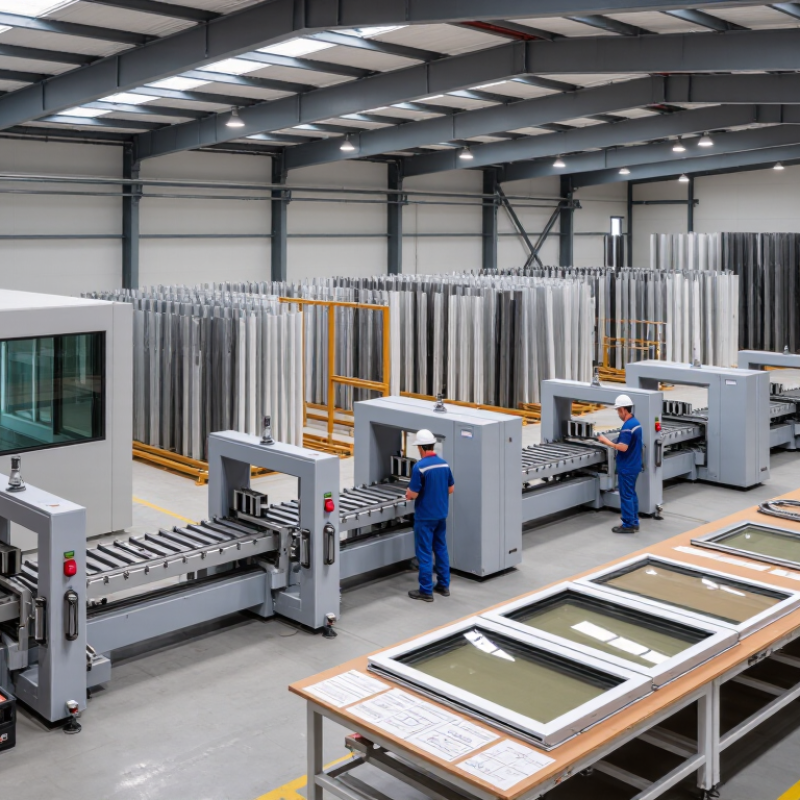
China Best System Windows Manufacturers for Global Buyers?

Choosing the right China Best System Windows Manufacturers for Global Buyers requires more than comparing online prices. System Windows combine frames, glazing, seals, hardware, and installation details into one coordinated solution. For buyers, this integration can improve thermal performance, sound control, weather resistance, and project consistency. Yet product quality depends on more than attractive brochures.

Reliable manufacturers should provide verifiable factory information, tested performance data, detailed drawings, and clear quality-control procedures. Buyers should examine aluminum or uPVC profiles, glass specifications, hardware brands, drainage design, and surface-finishing standards. A professional supplier can explain U-values, air tightness, water resistance, wind-load ratings, and regional climate suitability without hiding behind vague marketing language. Factory visits, video inspections, sample testing, and pre-shipment checks also create stronger evidence than promises alone.

Details matter. A window may look excellent in a showroom but perform poorly if the gasket is uneven or the installation gap is ignored. Small mistakes become visible during heavy rain, winter heating, or coastal exposure. This is where experienced manufacturers distinguish themselves. They should adapt System Windows to building codes, opening sizes, color requirements, packaging needs, and local installation practices.

No supplier is perfect. Even an experienced exporter may face communication delays or inconsistent subcontracting. That risk deserves honest discussion. Global buyers should compare documented capability, after-sales support, production capacity, and response quality before signing a contract. The best choice is not always the largest factory. It is the manufacturer that proves reliability, explains limitations, and delivers repeatable performance from sample to completed project.

China Best System Windows Manufacturers for Global Buyers?

System Windows Explained: U-Values Below 1.0 W/m²K and Air-Tightness Classes

China Best System Windows Manufacturers for Global Buyers?

System Windows Explained: U-Values Below 1.0 W/m²K and Air-Tightness Classes

For global buyers, a system window should be judged by tested performance, not attractive brochures. A whole-window U-value, called Uw, below 1.0 W/m²K usually requires triple glazing, low-emissivity coatings, warm-edge spacers, and insulated frames. Check the complete window value. Ug describes only the glass, so it can create a misleading impression.

Air-tightness matters just as much. Under EN 12207, Class 4 represents strong resistance to air leakage during pressure testing. In practice, this can reduce drafts around a quiet bedroom window on a windy evening. Ask for laboratory reports, test sizes, and installation details. A large window may perform differently from a small sample.

Do not overlook the factory and site connection. Accurate welding, corner cleaning, gasket continuity, and controlled hardware adjustment affect real results. The frame may achieve excellent numbers, yet poor sealing tape can weaken the finished opening. I have seen projects focus heavily on U-values while ignoring sill drainage and wall interfaces. That approach needs reconsideration.

Climate also changes priorities: cold regions demand insulation, while humid areas require drainage, ventilation, and corrosion-resistant components. Verify certification validity, glass configuration, and warranty terms before comparing quotations.

How to Evaluate Chinese Manufacturers: EN 14351-1, ISO 9001, and CE Compliance

China Best System Windows Manufacturers for Global Buyers?

For global buyers, compliance should come before appearance or price. EN 14351-1 covers key window performance, including air permeability, watertightness, wind resistance, and thermal properties. Ask manufacturers for current test reports, product scope, and a Declaration of Performance. European Commission guidance makes clear that CE marking supports market access, not automatic product quality.

ISO 9001 is also useful, but only when verified on the factory floor. The ISO Survey 2022 recorded more than 1.26 million ISO 9001 certificates worldwide. That figure shows its broad adoption, not guaranteed consistency. Check the certificate’s scope, validity, issuing body, and production address. Then inspect batch records, glass labels, hardware checks, and corrective-action logs. Small details expose weak systems.

Tips: Request one sample window and test its seals, drainage paths, frame joints, and hardware operation. Compare the tested configuration with your purchase specification. A certificate may cover one profile system, not every finished window. I have seen polished documents hide unclear responsibilities. That deserves a second review. Insist on independent laboratory evidence, traceable materials, and written confirmation of CE-related duties for your destination market.

Top Chinese System Window Suppliers by Thermal, Acoustic, and Wind Performance

China’s best system window suppliers should be judged by measured performance, not polished brochures. The U.S. Department of Energy reports that windows can influence about 25–30% of residential heating and cooling energy use. Therefore, global buyers should compare whole-window Uw values, spacer design, glass configuration, and installation details. A lower frame U-value alone can mislead.

Thermal results need independent laboratory evidence, preferably under ISO 10077 calculation methods or equivalent testing. For acoustic performance, request Rw and Ctr values, not vague claims such as “noise reduction.” Laminated glass, asymmetric panes, and compression seals can improve traffic-noise control. However, acoustic performance often drops after poor installation. Small gaps matter. The World Health Organization’s Environmental Noise Guidelines also connect long-term transport noise with sleep and health risks, making site-specific acoustic testing valuable.

Wind resistance requires a clear classification under EN 12210, while air permeability should be verified under EN 12207. Suppliers serving coastal or high-rise projects should provide pressure-test records, hardware specifications, and repeatable batch-control procedures. The National Fenestration Rating Council emphasizes whole-product ratings, which is a useful benchmark for comparing imported systems. In practice, Chinese manufacturers may offer strong thermal breaks and competitive customization, but quality consistency still deserves scrutiny. Factory audits, sample testing, and project references remain essential. I would not accept one test certificate as permanent proof. Performance can change with profiles, glass, hardware, and assembly workers.

China Best System Windows for Global Buyers: Thermal, Acoustic and Wind Performance

Anonymous performance benchmarks for system-window specifications commonly used in international projects. Lower Uw indicates better thermal insulation, while higher Rw and wind-test pressure indicate stronger acoustic and wind performance.

Reference framework: thermal transmittance is expressed as Uw in W/m²K, airborne sound insulation as Rw in dB, and wind resistance as test pressure in Pa. Wind-pressure levels follow the progression used in EN 12210 classification; actual results depend on profile design, glazing, size, hardware and installation.

Comparing Materials, Hardware, Glazing, and NFRC-Style Energy Metrics

Global buyers should compare system windows by tested performance, not appearance alone. Material choice affects durability, thermal movement, and maintenance. Thermally broken aluminum offers strength and slim sightlines. uPVC usually provides lower heat transfer and simpler upkeep. Wood-composite frames can improve insulation, but moisture control remains critical.

Hardware deserves equal attention. Inspect hinge adjustment, locking pressure, drainage paths, and corrosion resistance. A smooth showroom sample proves little. I have seen attractive windows fail because seals compressed unevenly after installation. Glazing changes the result dramatically. Low-emissivity coatings reduce radiant heat loss, while argon-filled cavities improve insulation. Warm-edge spacers can reduce edge condensation. However, glass weight may strain undersized hardware.

Use NFRC-style metrics when comparing suppliers. U-factor indicates heat transfer; lower values generally perform better. Solar heat gain coefficient, or SHGC, should match the climate and façade direction. Visible transmittance affects daylight, while air leakage reveals sealing quality. Ask for complete test reports, sample sizes, test temperatures, and installation conditions. Do not compare figures from different standards without checking units. A claimed number may look precise but still lack useful evidence. On-site shading, poor flashing, and careless fitting can undermine excellent factory data. That part is often overlooked.

Global Buyer Checklist: Testing, Customization, Lead Times, and Warranty Terms

China Best System Windows Manufacturers for Global Buyers?

A reliable supplier should provide recent test reports, not only attractive brochures. Check air leakage, water penetration, wind pressure, and thermal performance results. Ask whether tests match your required window size and glass build-up. Request a production sample. Inspect corner joints, drainage holes, gaskets, hardware movement, and coating consistency. Small defects often appear at these points.

Customization needs written control. Confirm frame dimensions, glass thickness, color codes, opening styles, screens, hardware, and packaging details. A technical drawing should receive approval before production. I prefer a signed sample or mock-up for unusual systems. It costs time. It prevents expensive misunderstandings. Factories may say “custom is easy,” but complex changes can affect strength and drainage.

Lead times should include design approval, material purchasing, fabrication, inspection, and loading. Ask for a milestone schedule and a realistic buffer. A promised date without a contingency plan is weak evidence. Warranty terms deserve equal attention. Confirm coverage periods, exclusions, installation responsibilities, and claims response times. Ask how replacement parts are identified and shipped. Keep photos and inspection records. No supplier is flawless, and neither is every buyer specification. A careful checklist exposes both problems early.

China Best System Windows Manufacturers for Global Buyers? - Global Buyer Checklist: Testing, Customization, Lead Times, and Warranty Terms

Evaluation Area Buyer-Focused Criterion Practical Benchmark for Global Projects Documents or Evidence to Request Recommended Decision Rule
Product Testing Thermal performance Request the complete-window U-value, including frame, glass, spacer, and opening configuration. For energy-conscious projects, a whole-window U-value at or below approximately 1.6 W/m²·K is a useful starting benchmark; local energy codes should take priority. Accredited laboratory report, calculation method, glass specification, spacer type, frame section drawings, and declared test size. Require before approval
Product Testing Air permeability Performance should be reported against the destination-market standard. For high-performance projects, target a low air-leakage classification and confirm the result applies to the complete window rather than glass alone. Air-permeability test report showing test pressure, window size, opening type, leakage result, and classification. Require project target
Product Testing Watertightness Specify the minimum pressure class according to building height, exposure, and regional weather. Coastal, high-rise, and storm-prone projects normally require a higher water-tightness rating than sheltered low-rise buildings. Static or dynamic water-tightness report, test pressure, spray duration, opening configuration, and failure observations. Match local exposure
Product Testing Wind-load resistance The design pressure must be calculated from the project location, building height, façade zone, window size, and applicable structural code. Avoid approving a window based only on a generic maximum pressure. Structural calculation, wind-load test report, mullion and transom details, anchor layout, and maximum tested dimensions. Verify by project
Product Testing Acoustic performance State the required weighted sound reduction index or equivalent local rating. Laminated acoustic glass, wider cavities, and improved seals may increase sound insulation, but the complete window must be tested or properly calculated. Laboratory acoustic report, glass build-up, frame type, seals, vents, and test configuration. Use for noisy sites
Product Testing Safety and security Confirm impact safety, child-safety hardware where required, restrictor operation, laminated-glass requirements, emergency egress dimensions, and resistance-to-forced-entry requirements for the target market. Safety-glazing certificates, hardware test reports, security classification, egress drawings, and installation instructions. Check local code
Customization Profile and glazing options Confirm available thermal breaks, frame depths, glazing thickness range, double- or triple-glazed compatibility, concealed drainage, insect screens, blinds, and compatible hardware before approving shop drawings. Section drawings, glazing tables, hardware schedule, color chart, drainage details, and approved sample corner. Approve sample first
Customization Surface finish and color consistency For exterior aluminum, specify the required coating system, color reference, gloss level, pretreatment, and expected exposure category. Different production batches should be controlled against an approved physical sample. Coating specification, finish certificate, color sample, thickness records, and batch inspection procedure. Control by sample
Customization Special sizes and shapes Arched, oversized, corner, sliding, tilt-and-turn, and fixed units may require separate calculations and tooling. Confirm maximum tested dimensions and allowable glass weight before finalizing the schedule. Unit-by-unit shop drawings, structural calculations, hardware load limits, and prototype test results. Review non-standard units
Production Typical lead time A realistic planning range is approximately 2–4 weeks for technical confirmation and samples, 4–8 weeks for standard production after approved drawings and deposit, and additional time for special glass, tooling, or unusual finishes. Milestone schedule covering drawing approval, material procurement, production, testing, packing, and dispatch. Put dates in contract
Production Sample and prototype timing Allow approximately 1–3 weeks for a standard corner or operating sample and longer for a fully glazed prototype. The sample should represent the final profile, seals, hardware, glass, drainage, and finish. Sample approval form, dimensional checklist, photographs, test records, and signed deviation list. Approve before mass production
Quality Control Pre-shipment inspection Inspect dimensions, diagonals, operation, glass condition, drainage, seal continuity, hardware, labels, packaging, and quantity. A third-party inspection can be used for larger or higher-risk orders. Inspection plan, inspection report, defect classification, corrective-action record, and packing list. Use lot inspection
Logistics Packaging and shipment protection Packaging should prevent frame distortion, glass edge damage, finish abrasion, water exposure, and movement during container transport. Units should be traceable to room, elevation, or window schedule. Packing method, loading photos, moisture protection details, crate labels, container loading plan, and replacement procedure. Inspect loading evidence
Warranty Warranty duration Commercial terms commonly separate coverage for frames, finish, insulated-glass seal failure, and hardware. Request clearly stated periods rather than accepting a single general warranty sentence. Signed warranty document identifying coverage period, start date, exclusions, remedy, and claim procedure. Make terms specific
Warranty Finish and corrosion coverage Coverage should reflect the exposure environment. Coastal, industrial, and high-humidity locations require an appropriate pretreatment and coating specification, not only a longer warranty period. Exposure classification, coating certificate, corrosion-resistance test, maintenance requirements, and excluded environments. Match environment
Warranty Claims and replacement process The contract should define response time, evidence required, replacement-part availability, labor responsibility, freight responsibility, and the remedy for repeated or systemic defects. Warranty workflow, service contact, spare-parts list, response-time commitment, and escalation procedure. Define before purchase
Compliance Destination-market documentation Select the applicable national or regional requirements before testing. Common references may include EN 14351-1, ASTM or AAMA-based specifications, CSA requirements, or local building codes, depending on the destination. Compliance matrix, applicable standards list, test reports, declarations, installation manuals, and product labeling details. Confirm jurisdiction
Installation Installation compatibility Performance depends on the opening preparation, anchors, perimeter sealing, sill flashing, tolerances, drainage path, and installer skill. The installation method must be designed together with the window system. Installation manual, approved details, anchor schedule, tolerance limits, sealant specification, and installer training record. Approve site details
Buyer note: The benchmark ranges above are general planning references for international procurement, not a substitute for the destination country’s building code, project wind calculations, accredited testing, or a signed commercial warranty. Final acceptance should be based on the exact window configuration, size, glass package, hardware, finish, installation method, and intended exposure.

Article Source:

This website uses cookies to ensure you get the best experience. By continuing to browse on this website, you accept the use of cookies for the above purposes.