What Are the Different Types of Kitchen Sinks?

A kitchen sink is more than a basin beneath a faucet. It shapes how you wash produce, rinse pans, and manage a busy countertop. The right Kitchen Sink can make daily tasks smoother; the wrong fit can leave little room for a stockpot or dish rack. Small details matter.

Architect Louis Sullivan’s design principle, “form follows function,” offers a useful lens for comparing sink styles. A top-mount sink rests on the counter and is often straightforward to install. An undermount model leaves the counter edge clear, making crumbs easier to sweep into the basin. Farmhouse sinks bring a deep bowl and exposed front, while integrated designs create a continuous surface with the countertop. Each choice has trade-offs. Countertop material, cabinet dimensions, plumbing location, and installation skill can affect what works in a particular home.

There is no single best type. Not really. A single-bowl sink can handle wide baking sheets, while a double-bowl model lets you separate washing from rinsing. Workstation sinks add ledges for accessories, but those parts need storage and cleaning too. Stainless steel is widely used and practical, though it can show water spots or scratches. Fireclay and composite options offer different looks and care needs. Even the faucet reach matters: a beautiful basin may feel awkward if water misses the drain.

This guide compares common sink types, materials, mounting methods, and everyday uses. It also points out details shoppers can overlook, such as bowl depth and cabinet clearance. Measure carefully. Your routine—not a showroom display—should guide the decision.
What Are the Different Types of Kitchen Sinks?

Classify Kitchen Sinks by Installation: Top-Mount, Undermount, and Farmhouse

Kitchen Sinks are often classified by how they meet the countertop. A top-mount sink drops into a cutout, leaving its rim visible on the counter. That rim supports the sink and can make replacement simpler when the opening fits. It may also catch crumbs or moisture, so wipe around the edge during regular cleaning. A small detail, but noticeable.

An undermount sink attaches beneath the countertop, creating a flat surface for sweeping crumbs directly into the bowl. It usually needs a countertop material and installation suited to secure mounting and careful sealing. Check the exposed counter edge, too; water and cleaning products reach it often. The seamless look is appealing, though it is not automatically easier to maintain.

A farmhouse sink has a broad front apron that remains visible beyond the cabinets. Its deep bowl can handle large pots, but the cabinet may need adjustments and the sink needs sturdy support. Measure carefully. A full sink is heavy. The apron can also collect splashes, and the front may sit differently from cabinet doors. “Farmhouse” describes a style, not one exact installation method, so compare dimensions and mounting details before choosing. The best fit depends on the counter, cabinetry, and how you use the sink each day.

What Are the Different Types of Kitchen Sinks?

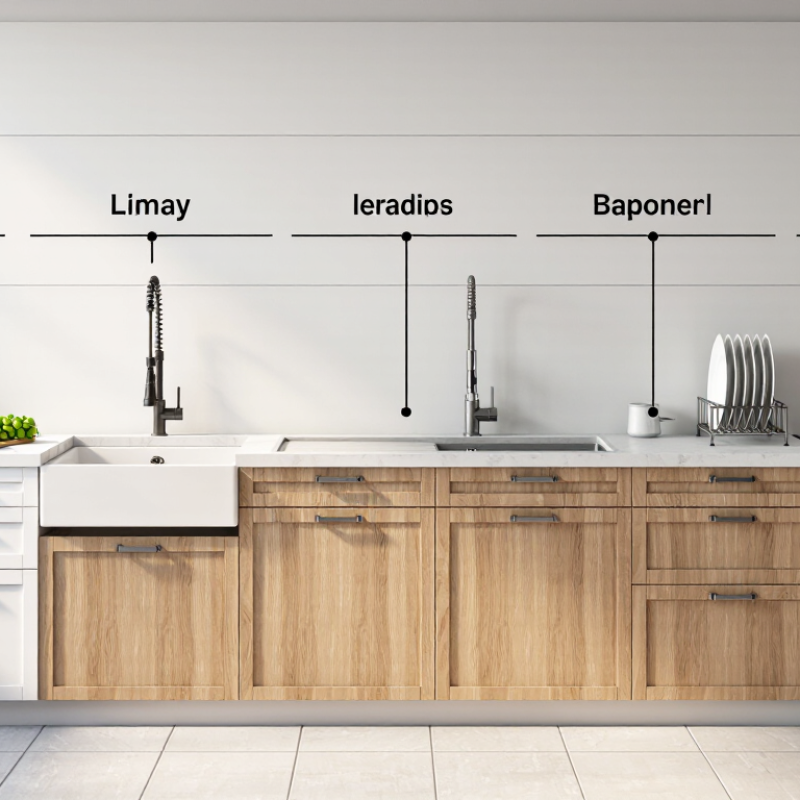
Classifying kitchen sinks by installation: top-mount, undermount, and farmhouse.

The chart highlights each style’s typical defining feature: a top-mount sink has a rim resting on the countertop, an undermount sink sits below it, and a farmhouse sink has an exposed front apron. Individual sink designs may vary.

Compare Basin Layouts: Single-, Double-, and Triple-Bowl Sinks

A single-bowl sink gives you one generous basin for washing a roasting pan or stacking dinner plates. It suits compact counters and cooks who prefer open space over built-in divisions. The trade-off is practical: rinsing vegetables while soaking a greasy pan can feel awkward. Room matters. Measure the largest cookware you actually use, not just the cabinet opening.

A double-bowl sink separates tasks: one side can hold soapy water while the other handles rinsing or food preparation. Equal bowls offer flexibility, while a smaller secondary bowl can preserve a wider washing area. The divider, however, may make large trays harder to maneuver. A low divider can help, but it will not suit every routine. Triple-bowl designs add a smaller compartment for scraps or quick rinsing, yet use more counter and cabinet space. That extra basin can become clutter rather than convenience.

Market data can help frame the choice, though it does not settle the bowl-count question. The 2024 Houzz U.S. Kitchen Trends Study reported that 74% of renovating homeowners chose undermount sinks, a detail about installation style rather than basin layout. In other words, the report shows a popular finish-to-counter relationship, not proof that one configuration works best. Check cabinet width, faucet reach, and daily washing habits before choosing; a beautiful divided sink can still feel cramped with a stockpot.

What Are the Different Types of Kitchen Sinks? — Compare Basin Layouts: Single-, Double-, and Triple-Bowl Sinks

Comparison of common kitchen sink basin layouts and their practical trade-offs
Feature Single-Bowl Sink Double-Bowl Sink Triple-Bowl Sink
Basin layout One uninterrupted basin. Two separate basins, which may be equal in size or divided into one larger and one smaller bowl. Three separate basins, often arranged as one larger bowl with two smaller bowls.
Typical overall sink width Commonly about 20–33 in (51–84 cm), depending on design and installation. Commonly about 30–36 in (76–91 cm); compact models are also available. Often about 33–48 in (84–122 cm); availability and fit depend on the model.
Space for large cookware Usually the easiest layout for accommodating wide pots, baking trays, and roasting pans. Large cookware may need to be angled or placed in the larger bowl, especially with unequal basins. Individual bowls are often narrower, so large cookware may be harder to fit.
Separate tasks Tasks share one basin; a removable basin rack or washing tub can create temporary zones. Allows two tasks at once, such as washing in one bowl and rinsing or draining in the other. Can support three separate tasks, such as food preparation, washing, and rinsing, when bowl sizes suit the work.
Counter and cabinet needs Often the simplest layout for smaller kitchens and limited counter space. Needs room for two bowls and a divider; check the sink’s required base-cabinet width before purchase. Generally needs more sink and cabinet space, which can reduce room for other under-sink storage.
Cleaning and maintenance Fewer bowl surfaces and dividers to clean; the broad basin can be convenient for wiping down. The divider and extra corners add surfaces to clean, but tasks can be separated. More bowl surfaces, edges, and drain areas typically require more routine cleaning.
Main advantages Open workspace, straightforward layout, and good capacity for bulky items. Useful task separation while retaining a practical amount of basin space. Multiple work zones can be useful for frequent food preparation or shared kitchen tasks.
Main trade-offs Does not provide built-in separation between washing, rinsing, and food preparation. Each bowl has less uninterrupted space than a single bowl of similar overall sink width. Takes up more space and may leave each bowl too small for larger cookware.
Often suits People who wash large cookware, prefer an open basin, or have a compact kitchen. Households that want to perform two sink tasks at the same time. Roomier kitchens where several dedicated sink work zones are useful.
Check before buying Confirm bowl dimensions, depth, faucet reach, and the required cabinet opening. Compare bowl proportions and divider height; confirm the cabinet and plumbing clearances. Measure the available counter and cabinet space carefully; check bowl dimensions and drain placement.

Note: Dimensions are general examples, not standardized limits. Actual sink sizes, bowl proportions, and cabinet requirements vary by model and installation type. Always check the manufacturer’s product specifications and measure the available space before selecting a sink.

Identify Common Sink Materials: Stainless Steel, Composite, Cast Iron, and Fireclay

Kitchen sink materials affect more than appearance. They change weight, sound, upkeep, and how a sink handles daily use. Stainless steel is a common, practical choice. It is relatively light and resists rust, while brushed finishes can soften the look of small scratches. Still, steel can dent, and a running tap may sound loud in a thin basin. Check the sink’s construction and sound padding, not just its shine. It is forgiving.

Composite sinks, often made from blended stone and resin, offer a more solid feel and a range of muted colors. They can resist everyday scratches, but performance varies by product. Hot cookware or harsh cleaners may damage some finishes, so care instructions matter. A dark basin can also show pale mineral deposits. That detail is easy to overlook.

Cast iron sinks have a heavy iron body coated with enamel. The smooth surface is easy to wipe clean, but installation may require a sturdy cabinet. A hard impact can chip the coating. Fireclay is molded and fired at high temperatures, creating a thick, glossy basin with a traditional look. It is heavy, too, and edges can chip from forceful impacts. The trade-off is not always tidy. Compare weight, cabinet support, cleaning needs, and how you use the sink each day. I might favor appearance in a showroom, then rethink it after lifting a full pot.

Compare Stainless-Steel Thickness: 16 Gauge Is About 1.5 mm

Kitchen sinks commonly use stainless steel, enameled cast iron, fireclay, or composite materials. Stainless steel is valued for its lighter weight and straightforward cleaning, while heavier ceramic and cast-iron options can feel solid under a running tap. The material matters, but so does the metal’s thickness. A thin basin may sound sharper when a pan lands in it. Noticeable, perhaps.

For stainless steel, 16 gauge is commonly listed as 0.0625 inch, or about 1.59 mm; product descriptions often round this to 1.5 mm. ASTM A480/A480M specifies requirements and thickness tolerances for flat-rolled stainless steel, so nominal gauge is not a promise that every point measures exactly the same. A 16-gauge basin generally offers more stiffness than a thinner sheet, but construction, bowl size, and mounting also affect vibration and noise. Check the actual specification, not just the gauge label.

A small caveat. Gauge conventions can vary across metals, so compare millimetres when evaluating sink listings. Look at the bowl’s underside, too: sound-dampening pads and a protective coating can change the feel and sound during ordinary use. Thickness helps, but it cannot tell the whole story.

Match Sink Size to Cabinet Width and Available Counter Space

Choosing a sink starts with the cabinet, not the bowl you admire in a showroom. Measure the base cabinet’s outside width, then check the sink’s stated minimum cabinet requirement. A wide rim or mounting clips may need extra room inside. Measure twice. A sink that technically fits can still leave little space for plumbing or installation.

Also measure the counter around the cabinet. A large, deep basin can crowd the work area, leaving no clear spot for a cutting board or a hot pan. In a narrow kitchen, a single-bowl sink may preserve more usable counter space than a broad double-bowl model. That depends on how you cook, though. If you wash dishes by hand, two compartments may earn their footprint. Keep some landing space beside the sink, and account for the faucet, soap dispenser, and backsplash before settling on dimensions. These details are easy to overlook on paper. A simple cardboard outline taped to the counter can help you judge the real scale before ordering.

This website uses cookies to ensure you get the best experience. By continuing to browse on this website, you accept the use of cookies for the above purposes.