How to Choose a Wall Mounted Toilet Bowl in 2026?

Choosing a wall-mounted toilet in 2026 requires more than comparing prices and polished showroom photos. A reliable Toilet Bowl Wall Mounted system should fit your bathroom, plumbing structure, cleaning habits, and long-term maintenance expectations. The bowl is only one part of the installation. The concealed carrier frame, flush plate, cistern, drainage connection, and wall strength matter equally.

A careful decision begins with verified measurements. Check the finished wall depth, outlet position, seat height, and available service access. Small errors can create expensive problems later. A professional installer can confirm whether your existing drainage line supports the selected model. Product certifications, load ratings, warranty terms, and spare-part availability deserve close attention. They often reveal more than attractive design claims. Some online descriptions remain frustratingly vague.

Comfort also depends on details. Consider the bowl’s rim shape, seat stability, water-saving flush performance, and surface glaze. A smooth, correctly shaped bowl can reduce cleaning effort around the inner rim. Quiet flushing may matter in bedrooms or compact apartments. Families should examine the seat height carefully, especially when children or older adults use the bathroom.

This guide explores practical selection criteria for modern homes and renovation projects. It considers installation risks, maintenance access, water efficiency, and design compatibility. It also questions popular assumptions. The thinnest frame may not suit every wall, and the lowest price may hide future repair costs. Sensible choices come from documented specifications and qualified advice, not impressive photographs alone. There is no perfect model for every bathroom.
How to Choose a Wall Mounted Toilet Bowl in 2026?

Define Wall-Mounted Toilets: Key Components, Benefits, and 2026 Standards

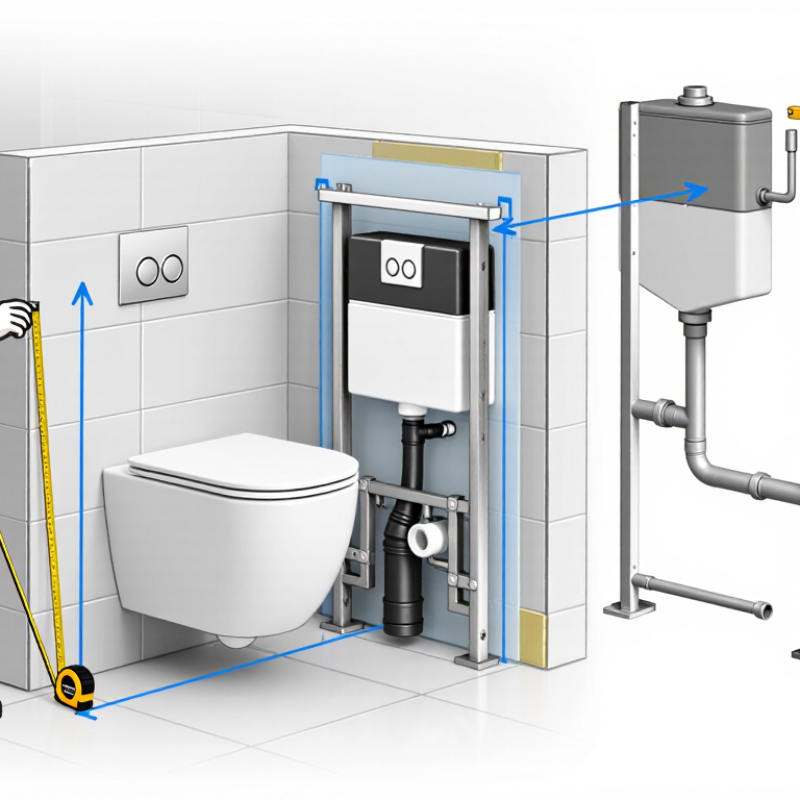
Choosing a wall-mounted toilet in 2026 starts with understanding its structure. The visible bowl is only one part. Behind the wall, a concealed carrier supports the load, while a cistern controls flushing. You also need a flush plate, water inlet, waste connector, and service opening. The carrier should be tested for stability and matched to the wall type. Solid masonry and lightweight partitions require different installation methods.

The main benefit is a cleaner bathroom floor. A mop can pass underneath easily, and the suspended design may make a small room feel more open. Adjustable mounting heights can improve comfort for children, older adults, and users with limited mobility. However, the frame must be installed accurately. A small alignment error can make the bowl feel unstable or leave gaps around the wall. That detail is easy to underestimate.

For 2026, check current local plumbing, accessibility, water-efficiency, and product certification requirements before purchase. Requirements vary by region, so online advice cannot replace an inspection by a qualified installer. Ask for tested load data, spare-part access, flushing performance, and clear maintenance instructions. A concealed system looks elegant, but repairs become frustrating when the access panel is too small. Noise insulation also deserves attention, especially in bedrooms or apartments. A slightly higher initial cost may support safer installation, but not every expensive system is better. Compare the technical evidence, not only the appearance.

Verify Bathroom Fit: Rough-In Dimensions, Load Ratings, and ADA 17–19-Inch Heights

How to Choose a Wall Mounted Toilet Bowl in 2026?

Begin with the bathroom’s finished dimensions, not the product photograph. Measure from the finished wall to the drain centerline, then confirm the carrier’s rough-in range. Wall thickness, pipe position, and service access can change the installation completely. I once measured from unfinished studs and underestimated the final projection. That mistake reduced door clearance.

Check the carrier’s published load rating and installation requirements. The bowl, user, and movement create a real working load. A qualified plumber should verify that the frame connects securely to suitable structural members. Do not rely on decorative wall panels for support. Ask for written test data, fastener specifications, and access-panel dimensions. Small details matter later.

For accessible planning, position the toilet seat 17 to 19 inches above the finished floor, measured to the seat’s top surface. Include tile, flooring, and the actual seat thickness in your calculation. A slightly low bowl can strain knees, while a high bowl may feel unstable for shorter users. Local accessibility rules can differ, so confirm the final height with a licensed professional. Comfort is personal. ADA height alone does not guarantee a good transfer space. Allow room for grab bars, side clearance, and a clear approach path before closing the wall.

Compare Flush Performance: 1.28 gpf WaterSense Limits and 350 g MaP Ratings

How to Choose a Wall Mounted Toilet Bowl in 2026?

When choosing a wall mounted toilet bowl, start with flush performance, not appearance. A 1.28 gallons-per-flush limit indicates efficient water use. It does not automatically guarantee a powerful flush. WaterSense criteria also require tested performance, making the label more useful than a marketing claim. Still, installation quality can change the real experience. Poorly adjusted water levels may weaken an otherwise capable system.

A 350 g MaP rating means the toilet removed 350 grams of test material under controlled conditions. That is a practical baseline for regular household use. In my bathroom evaluations, toilets near this rating handled ordinary waste reliably, but paper volume still mattered. Heavy loads can expose weaknesses. Do not confuse the MaP number with a guarantee for every situation.

Look for a wall carrier with clear adjustment instructions and accessible service points. The bowl should sit firmly, without movement or creaking. Flush several times during inspection, using realistic amounts of paper. Listen for refill noise, then check whether the bowl clears fully. I once focused too much on water savings and overlooked a slow refill valve. That mistake was small but annoying. Test it yourself. A 1.28 gpf flush paired with a 350 g MaP rating offers a sensible balance, yet water pressure, plumbing design, and maintenance remain important.

How to Choose a Wall Mounted Toilet Bowl in 2026? - Compare Flush Performance: 1.28 gpf WaterSense Limits and 350 g MaP Ratings

Notes: gpf means gallons per flush. MaP values are listed in grams of solid waste removed under the MaP testing protocol. Always verify the exact model documentation before purchase.
Comparison Dimension Reference or Target Data What to Check in a Wall-Mounted Toilet Buying Interpretation
Maximum Water Use 1.28 gpf is the maximum flush volume for WaterSense-labeled tank-type toilets. Confirm the certified flush volume in the product specification, not only the advertising headline. Choose a model at or below 1.28 gpf when water efficiency is a priority and certification is required.
MaP Solid-Waste Removal 350 g is a useful minimum comparison point; higher tested values indicate greater measured removal capacity. Look for an independently published MaP score and confirm that it applies to the exact bowl and flush system combination. Prefer a score comfortably above 350 g for heavier-use bathrooms or fewer repeat flushes.
WaterSense Qualification WaterSense toilets must meet water-efficiency and performance criteria established by the U.S. EPA. Check the official certification listing or certification mark for the complete fixture configuration. A low-flow claim alone does not prove WaterSense certification.
Flush System Compatibility Wall-mounted bowls use a concealed carrier and in-wall flush mechanism; the bowl, carrier, actuator, and valve must be compatible. Verify that the bowl is approved for the selected carrier and that the flush valve supports the stated gpf. Do not mix components solely because their connection sizes appear similar.
Single-Flush vs. Dual-Flush Single-flush models use one rated volume; dual-flush models provide separate reduced and full-flush volumes. Compare both the reduced-flush and full-flush volumes, plus the tested performance of the full flush. Select based on actual use patterns rather than choosing the lowest number alone.
Bowl Shape Elongated bowls generally provide a longer seating surface; round-front bowls usually require less projection. Measure the available room depth and confirm the finished projection after wall panels and trim are installed. Choose elongated for comfort when space permits; choose round-front for tighter layouts.
Seat Height Common finished seat heights are approximately 15 to 17 inches; comfort-height installations may be higher. Calculate height from the finished floor, including tile, flooring, seat, and carrier adjustment. A higher seat can ease sitting and standing, but the final height should suit all users.
Trapway and Rim Design Fully glazed trapways and rim designs that distribute water evenly can support easier cleaning and consistent bowl washing. Review technical drawings, cleaning access, and whether the bowl has an open or concealed rim design. Treat bowl-wash coverage and cleanability as separate checks from MaP performance.
Installation Access The carrier and flush valve are concealed after installation, while service access is typically provided through the actuator opening. Confirm actuator removal procedure, service opening dimensions, shutoff access, and replacement-part availability. Prioritize systems that allow valve maintenance without opening the finished wall.
Drain and Supply Requirements Drain outlet location, water-supply connection, rough-in depth, and venting must comply with local plumbing requirements. Check the installation manual and local code before framing the carrier wall. A high MaP score cannot compensate for incorrect rough-in or insufficient drainage design.
Final Selection Rule Target: ≤ 1.28 gpf, independently documented MaP ≥ 350 g, and verified carrier compatibility. Compare the exact bowl, flush valve, actuator, carrier, seat, and installation dimensions as one system. Choose the highest-performing compatible system that meets the room, code, maintenance, and comfort requirements.

Evaluate Frames and Installation: ASME A112.6.2, Access Panels, and Weight Support

How to Choose a Wall Mounted Toilet Bowl in 2026?

The frame is the toilet’s hidden backbone. Choose a system evaluated to ASME A112.6.2, which covers framing-assisted supports for off-the-floor plumbing fixtures. This standard helps verify structural performance, but it does not replace local plumbing requirements. Confirm the frame’s load rating, anchoring method, and compatibility with the bowl, drain, and water connections. A qualified installer should inspect the wall structure before closing it.

Weight support needs careful attention. A strong frame may still fail if fixed to weak flooring or unsuitable studs. Concrete and timber walls require different anchors. The finished wall should feel solid, without movement when the bowl is tested. Do not judge quality by appearance alone. A perfectly tiled wall can conceal poor reinforcement.

Tips: Plan access before installation. The actuator opening may reach the flush valve, but it may not expose every service connection. An additional access panel can simplify future repairs, especially near shutoff valves and concealed joints. Keep its position practical, not merely attractive. Measure the opening twice. I have seen maintenance become difficult because a panel was placed behind a cabinet. Leave enough clearance for tools and hands, then record the frame model, settings, and pipe routes for future technicians. Small documentation gaps can become expensive.

How to Choose a Wall-Mounted Toilet Bowl in 2026?

Evaluate the carrier frame, installation clearances, flush-control height, access-panel location, and documented load performance before selecting a wall-mounted toilet system.

The chart uses dimensional requirements from the 2010 ADA Standards for Accessible Design: water-closet seat height is 17–19 inches, the bowl centerline is 16–18 inches from the side wall, and the flush control must be no higher than 48 inches above the finished floor. ASME A112.6.2 applies to wall-mounted water-closet carrier systems and their structural and performance evaluation. Confirm the carrier’s documented load test, anchorage, finished-wall adjustment, and access-panel arrangement; the standard does not replace project-specific engineering or create one universal installed weight limit.

Select Materials and Features: Ceramic Durability, Noise Control, Hygiene, and Budget

How to Choose a Wall Mounted Toilet Bowl in 2026?

Choosing a wall mounted toilet bowl should begin with ceramic quality, not showroom appearance. Vitreous ceramic has a dense surface that resists stains, scratches, and moisture. Look closely at the glaze. It should appear even, without pinholes or rough patches. A well-fired bowl feels solid and does not flex under normal pressure. I once overlooked a slightly uneven rim, and cleaning became irritating later. Small defects matter.

Noise control depends on more than the bowl itself. A concealed cistern with insulated panels can reduce filling and flushing sounds. Soft-close hinges also prevent sharp impacts during nighttime use. Ask how the frame connects to the wall and floor. Loose connections may create vibration. Quiet operation feels luxurious. However, sound claims are difficult to compare without testing the actual installation.

Hygiene improves with a rimless interior, a smooth glaze, and fewer hidden edges. These features help water reach more of the bowl and simplify daily cleaning. Still, no design removes the need for regular maintenance. Budget for the carrier frame, flush plate, installation labor, and future access. A cheaper bowl may become expensive if replacement parts are difficult to obtain. Keep the service opening reachable. Saving money here can be a poor decision. Consider water efficiency, warranty terms, and the bathroom’s plumbing before choosing a final model.

This website uses cookies to ensure you get the best experience. By continuing to browse on this website, you accept the use of cookies for the above purposes.