China Top Wall Paneling Manufacturers for Global Buyers
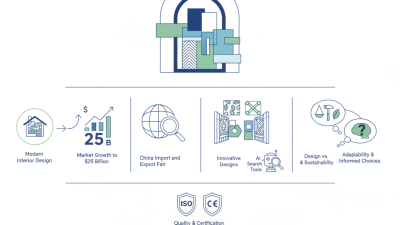
Global demand for wall paneling is expanding as developers seek faster installation, improved acoustics, and more efficient interior finishes. Fortune Business Insights estimates the global wall panels market at approximately USD 16.7 billion in 2023. Its report projects continued growth through 2032, supported by residential renovation, commercial construction, and modular building activity. These figures show opportunity, but market definitions vary between research providers.
China has become a major sourcing base for decorative, acoustic, PVC, WPC, and fire-rated panels. Experienced manufacturers often combine automated lamination lines with manual quality checks. Buyers may inspect surface consistency, edge alignment, moisture resistance, and packaging strength before shipment. A sample inspection can reveal problems that catalog photographs cannot.
Reliable suppliers should provide traceable material specifications and independent test reports. Relevant references may include ISO 9001 quality systems, ASTM E84 flame-spread testing, and EN 13501-1 reaction-to-fire classifications. The correct standard depends on the destination market and project type. Intertek, SGS, and TÜV testing can add useful verification, although certification alone does not guarantee consistent production.
This guide examines China’s leading wall paneling manufacturers through product range, production capability, export experience, customization, and quality control. It also considers lead times, minimum order quantities, and protective packaging for long-distance shipping. Those details matter. A beautiful panel can still fail when moisture enters a damaged carton. Industry reports offer direction, not certainty. Supplier audits, factory communication, and project-specific samples remain essential for responsible global purchasing.
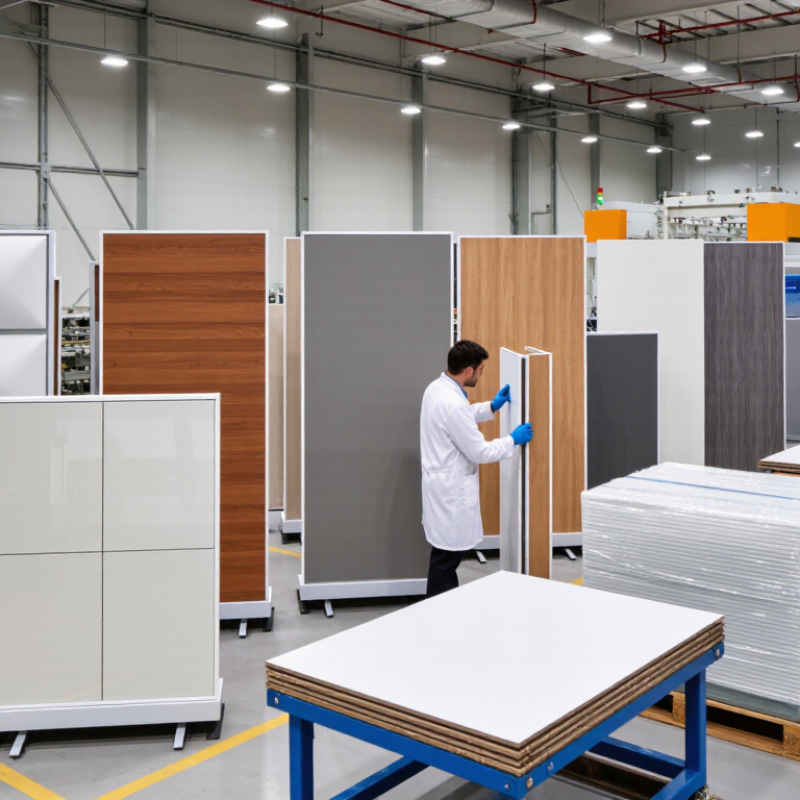
Wall Paneling in China: Materials, Profiles, and Global Applications
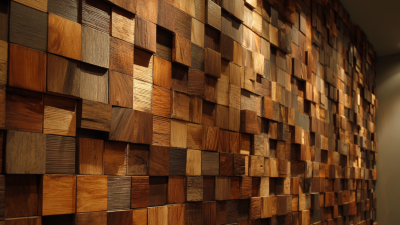
China’s wall paneling manufacturers serve residential, hospitality, retail, and office projects worldwide. Common materials include PVC, WPC, MDF veneer, aluminum, and recycled PET. Each material behaves differently under heat, moisture, impact, and cleaning chemicals.
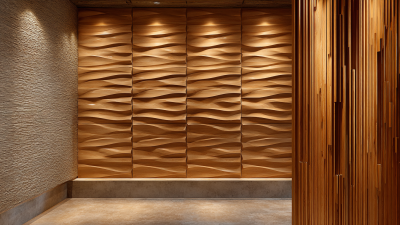
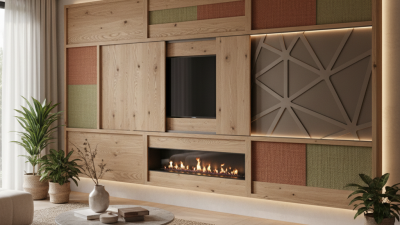
Profiles shape both appearance and installation. Slatted, fluted, grooved, flat, and acoustic panels create distinct visual effects. Matching corner trims and concealed fixing systems can improve the final finish.
In humid areas, moisture resistance matters more than surface style. For hotels or public interiors, buyers should review fire performance, formaldehyde emissions, and acoustic data. Requirements vary by destination.
Tips: Request full-size samples, not only small swatches. Check panel thickness, backing strength, color consistency, and edge accuracy. Ask for test reports from qualified laboratories. Confirm packaging for long-distance transport. A beautiful sample can still fail during installation. That detail is often missed. Discuss tolerances before production, because slight profile differences become obvious across a large wall. Factory photos help, but inspection records offer stronger evidence. Good suppliers explain limitations clearly, including minimum order quantities and realistic lead times.
How to Identify Top Manufacturers Through ISO 9001 and EN 13986 Compliance
China Top Wall Paneling Manufacturers for Global Buyers
When evaluating Chinese wall panel manufacturers, ISO 9001 offers a useful starting point. It shows that the factory operates a documented quality management system. Buyers should check the certificate scope, issuing body, validity period, and production address. A certificate covering only office services may not represent panel manufacturing. Ask for batch records, inspection procedures, and corrective-action reports. Real evidence matters.
EN 13986 is more product-focused. It applies to wood-based panels used in construction and supports performance assessment for defined applications. Request the Declaration of Performance and relevant test reports. Check formaldehyde emissions, reaction to fire, moisture resistance, and mechanical properties. These details should match the panel thickness, surface finish, and intended installation. For example, a decorative interior panel may require different evidence from a moisture-resistant ceiling panel. Do not accept a generic laboratory file.
Factory visits can reveal what documents hide. Look at panel storage, edge protection, calibration labels, and sample retention shelves. Trace one carton backward, from shipping label to raw material record. That exercise is revealing. Still, my own sourcing checklist can be too rigid. Small factories may maintain strong controls with less polished paperwork. The better question is whether records are consistent, current, and independently verifiable. Compare production samples with test reports before signing a supply agreement. Also confirm that claimed compliance remains valid for the exact product configuration, not merely a similar panel.
Safety Benchmarks: E1 Formaldehyde ≤0.124 mg/m³ and A2-s1,d0 Fire Ratings
For global buyers, wall panel safety should begin with measurable benchmarks. An E1 classification means formaldehyde emissions do not exceed 0.124 mg/m³ under the relevant test conditions. This figure matters in bedrooms, schools, hospitals, and offices with limited ventilation. Ask for recent laboratory reports, not only a sales brochure. Check the tested panel thickness, surface finish, adhesive, and production batch.
Fire performance requires equal care. An A2-s1,d0 rating indicates limited combustibility, low smoke production, and no flaming droplets under EN 13501-1 classification. However, the rating applies to the tested product or assembly. A different backing board, coating, joint detail, or installation method may change performance. Small details matter.
Reliable manufacturers should provide traceable quality records, factory inspection procedures, and clear installation guidance. Buyers can request sealed-chamber emission testing and reaction-to-fire reports from accredited laboratories. Inspect packaging for moisture damage before installation. Store panels flat and keep them away from direct water exposure. It sounds basic. It is often missed.
One practical concern deserves attention: a certificate may be valid, yet the delivered batch may not match the tested specification. Compare labels, technical data, and purchase documents. Keep retained samples when projects are large. Safety claims should survive real inspection, not just a polished quotation. This discipline helps global buyers assess China wall panel manufacturers with greater confidence, while leaving room to question weak evidence.
The E1 benchmark follows EN 717-1, with formaldehyde emissions limited to 0.124 mg/m³. The A2-s1,d0 classification follows EN 13501-1: A2 indicates very limited contribution to fire, s1 indicates the lowest smoke-production category, and d0 indicates no flaming droplets or particles. Fire-class components are shown as ordinal reference scores, not physical measurements.
Global Buyer Checklist: Testing, Packaging, Incoterms, Lead Times, and Warranty Terms
China Top Wall Paneling Manufacturers for Global Buyers
A reliable supplier should provide test reports before production begins. Request fire classification, formaldehyde emissions, moisture resistance, impact strength, and dimensional stability results. ASTM E84 and ISO 16000 methods are widely referenced for surface burning and indoor emissions. However, test reports need matching product codes, batch numbers, and laboratories. A document alone proves little.
Packaging deserves equal attention. Ask for edge protectors, moisture barriers, pallet limits, carton drop testing, and loading photos. The World Bank’s 2023 Logistics Performance Index shows that shipment reliability varies considerably across markets. Small packaging savings can create large replacement costs. Confirm Incoterms 2020 in writing, including who pays freight, insurance, customs clearance, and destination charges. Lead times should separate sampling, production, inspection, and port delays. A single “30-day delivery” promise is too vague.
Tips:
Use a pre-shipment checklist. Approve one sealed reference sample. Record carton dimensions and gross weight. Request a warranty covering peeling, warping, color variation, and adhesive failure, with clear exclusions and claim deadlines. A 12-month warranty may sound acceptable, but installation conditions can shorten real performance. Ask for installation guidance and spare-panel ratios. Buyers sometimes overlook this detail. That mistake is expensive. Review every assumption before signing.