What Is a Cold Chain Warehouse?
A cold chain warehouse is more than a chilled building with loading doors. It is a controlled environment that protects temperature-sensitive products from receiving to dispatch. Refrigerated foods, vaccines, biologics, and specialty medicines may lose quality during only one unnoticed temperature excursion.
Healthcare supply-chain scholar Dr. Prashant Yadav offers a useful reminder: “Healthcare supply chains are about saving lives, not merely moving boxes.” His point applies directly to every cold chain warehouse. Staff must check product temperatures at arrival, record storage conditions, and move goods through insulated docks. Digital sensors should monitor temperature continuously. Backup power must be available before an outage occurs. Calibration matters, too.
Small details decide reliability. A warm doorway can affect nearby pallets. A damaged door seal can increase compressor workload. Poor stock rotation can leave older batches behind newer ones. FEFO practices, meaning “first expired, first out,” help reduce that risk. Clear alarm procedures also matter, because data is useless if nobody responds.
Still, no warehouse is perfect. Sensors can drift. Batteries can fail. Human decisions can be rushed during peak shipping periods. That uncomfortable reality deserves attention. Strong operations include regular maintenance, documented training, emergency drills, and honest reviews of temperature deviations. A cold chain warehouse should not merely look modern. It should prove that products remained within their required conditions. That proof builds trust.
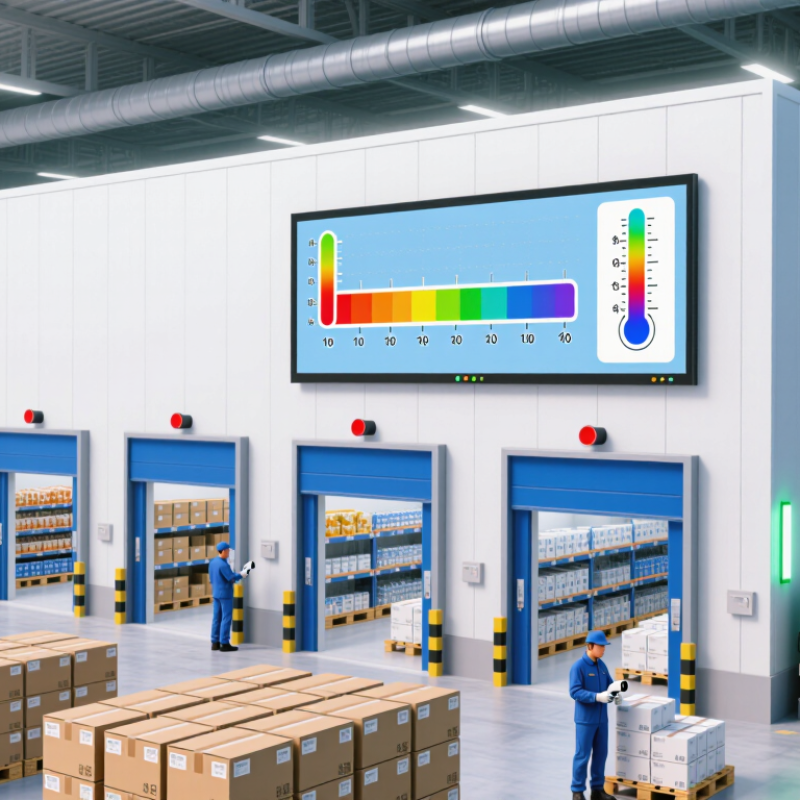
Definition and Role of a Cold Chain Warehouse
A cold chain warehouse is a temperature-controlled facility for receiving, storing, and dispatching perishable goods. It protects products such as fresh food, frozen items, and temperature-sensitive healthcare materials. The warehouse maintains defined conditions, often chilled temperatures near 2–8°C or frozen storage below -18°C. Exact requirements depend on the product and its approved specifications.
Its role extends beyond refrigeration. Staff check incoming temperatures, inspect packaging, and record product movement. Digital sensors monitor air conditions around the clock. Backup power, insulated doors, and calibrated alarms reduce the risk of temperature excursions.
Loading docks also matter. A warm dock can weaken control within minutes. The cold chain is only as reliable as its weakest handoff.
In practical operations, workers often use FEFO, meaning “first expired, first out,” to reduce waste. They separate storage zones and limit door openings. Still, the process is rarely perfect. A sensor may be accurate while a product core warms unnoticed. Operators should review alarm records, delivery delays, and repeated handling problems. Regular equipment checks and clear training support reliable decisions. Human judgment remains important, especially when data looks normal but packaging feels unusually soft.
Temperature Zones and Storage Conditions
What Is a Cold Chain Warehouse?
A cold chain warehouse protects temperature-sensitive goods from receiving through dispatch. Its temperature zones depend on product specifications, not convenience. Chilled rooms commonly operate between 2°C and 8°C for many medicines and fresh foods. Frozen storage usually stays at -18°C or below. Ultra-low rooms can reach -60°C to -80°C for selected biological materials. The World Health Organization recommends continuous monitoring for vaccines, with many products requiring 2°C to 8°C storage. These limits are narrow. A short loading-door delay can matter.
The warehouse should separate ambient, chilled, frozen, and quarantine areas. Air curtains, insulated doors, calibrated sensors, and mapped airflow reduce temperature variation. The FAO’s State of Food and Agriculture report indicates that 13.2% of food is lost before retail. Weak refrigeration and poor handling contribute to this waste. Yet temperature alone is not enough. Operators must control humidity, stock rotation, door openings, and backup power. In practice, neat zones sometimes fail during peak receiving hours. That deserves honest review.
Tips: Place sensors near warmest and coldest points, not only beside the evaporator. Record temperatures continuously and review alarms daily. Use FEFO rotation, meaning first expiry, first out. Pre-cool products before storage when specifications require it. Keep loading plans short and disciplined. The Global Cold Chain Alliance emphasizes validated temperature control and documented procedures across cold-chain facilities. Staff should also inspect damaged cartons, condensation, and ice buildup. Small signs often reveal larger process problems.
Safety Standards and Temperature Monitoring
What Is a Cold Chain Warehouse?
A cold chain warehouse stores temperature-sensitive goods under controlled conditions. Safety depends on more than refrigeration. It requires validated procedures, trained workers, calibrated sensors, and documented responses to failures.
The 2020 Global Cold Chain Alliance Global Cold Storage Capacity Report recorded approximately 719 million cubic meters of refrigerated storage worldwide. That scale makes monitoring essential. In food storage, the FDA Food Code 2022 recommends keeping most time-temperature control foods at 5°C or below. A warehouse should place sensors near doors, loading docks, evaporators, and warmer corners. These locations reveal temperature variation that one central sensor can miss.
Temperature records should show continuous readings, alarm events, calibration dates, and corrective actions. Wireless systems can help, but they are not automatically reliable. Network outages, dead batteries, and poorly positioned probes still create blind spots. Staff should verify alarms physically and protect backup records. I have found that simple paper checks sometimes expose problems that dashboards hide. That is not elegant, but it is useful.
Tips: Map temperatures during full and empty conditions. Test alarms at realistic thresholds. Keep doors closed during loading. Investigate every excursion, even when products appear normal. Review monitoring data weekly, and question repeated “minor” deviations. A cold warehouse is only as safe as its evidence.
What Is a Cold Chain Warehouse? - Safety Standards and Temperature Monitoring
A cold chain warehouse stores temperature-sensitive products under controlled conditions from receiving to dispatch. The ranges below show commonly used reference storage limits; specific requirements depend on the product, regulation, and approved handling procedure.
Temperature monitoring practice: Use calibrated sensors, continuous data logging, documented alarm limits, and corrective-action procedures. Monitoring should cover storage zones, loading areas, and other locations where temperature excursions may occur.