10 Tips for Buying Double Barn Doors?
Choosing double barn doors can transform a plain room, but style should not replace careful planning. The U.S. Census Bureau’s construction data shows continued activity in residential improvements, while Houzz research reports that homeowners increasingly invest in functional interior upgrades. However, these reports rarely isolate double barn doors. Their popularity is visible, but precise market figures remain limited.
Door-installation educator Gary Katz emphasizes a practical truth: “A door is only as good as the opening it fits.” That principle matters here. A beautiful oak panel cannot hide a weak wall, uneven floor, or undersized track. Before buying, measure the opening, wall clearance, trim depth, and door overlap. Then question your assumptions.
This guide presents 10 tips for buying double barn doors with fewer expensive surprises. It considers solid wood, engineered panels, glass, hardware strength, privacy, sound control, and installation access. The American Institute of Architects’ Home Design Trends Survey has repeatedly highlighted demand for flexible, visually open interiors, yet openness can conflict with privacy. That tension deserves attention.
Look closely at the everyday details. Will the door clear a light switch? Can two panels pass without colliding? Does the track support the full door weight? A soft-close system may protect fingers, but it cannot correct poor alignment. Some advice online sounds convincing. It may still ignore your wall structure.
Use these recommendations as a practical checklist, not a substitute for professional inspection. The right double barn doors should look refined, move quietly, and remain dependable after the first impressive photograph.
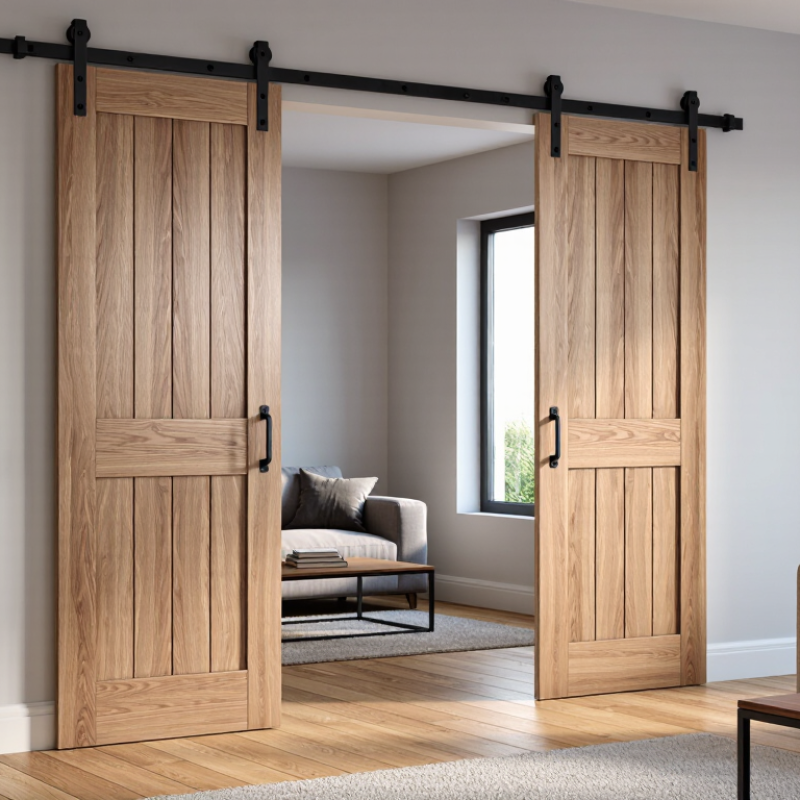
Define Your Space, Purpose, and Double Barn Door Requirements
10 Tips for Buying Double Barn Doors?
Define Your Space, Purpose, and Double Barn Door Requirements
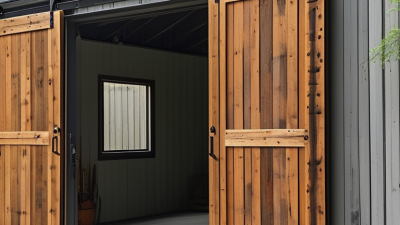
Begin with the opening, not the door style. Measure width, height, and wall space on both sides. Add extra overlap for privacy and light control. A double door needs room to slide in opposite directions. Check nearby switches, furniture, trim, and corners before ordering.
Decide what the doors must do. Do they separate a dining area, hide storage, or soften a bedroom entrance? Privacy needs may require solid panels. A home office may benefit from limited sound transfer, although barn doors rarely block noise completely. Measure the wall structure too. The track must attach securely, not merely to thin wall covering. That detail is easy to miss.
Choose a door weight and track system that match the opening. Leave enough clearance above rugs, baseboards, and uneven floors. Consider handles that will not strike the wall during movement. Smooth rollers matter, especially in busy homes. Ask about installation tolerances, maintenance, and replacement hardware. I have seen attractive doors become frustrating because the track was too short. Recheck every measurement. Small errors become visible gaps. Keep the design practical, even when appearance leads the decision.
10 Tips for Buying Double Barn Doors: Define Your Space, Purpose, and Requirements
These planning dimensions use a 2-inch center overlap between the two door slabs. Each slab width is calculated as half of the opening width plus 1 inch, while the recommended track length is twice the total slab width so both doors can slide fully clear of the opening.
Measure the Opening and Plan for Proper Door Clearance
Before ordering double barn doors, measure the opening carefully. Record the width at the top, center, and bottom. Walls are rarely perfectly square. Use the smallest width, not the largest. Measure the height on both sides, then check the center. A steel tape provides more reliable results than a flexible ruler. I once trusted one height measurement and had to change the mounting plan. That mistake was avoidable.
Plan clearance before choosing door dimensions. Each door usually needs enough overlap beyond the opening to block light and reduce drafts. A practical starting point is two inches of overlap per side. Uneven walls may require more. Confirm that the track can accommodate both panels when opened. The doors should slide fully clear of the passage. They should not cover switches, trim, artwork, or nearby furniture. Keep the handles from striking the wall. Small details matter.
Check the space above the opening for the track, mounting hardware, and door height. Include the header, ceiling slope, and decorative trim in your calculation. A few extra inches can prevent scraping. Also inspect the floor for level. A sloped floor may change the bottom gap. Leave enough clearance for smooth movement, but avoid a large gap that exposes the room. If measurements conflict, pause and measure again. Not glamorous, but accurate. A written sketch helps installers verify every dimension before drilling.
Compare Door Materials, Styles, Finishes, and Durability
10 Tips for Buying Double Barn Doors
Compare materials before admiring the finish. Solid wood gives a warm, substantial feel, but it can expand with humidity. The USDA Forest Products Laboratory’s Wood Handbook explains that moisture changes can cause wood movement and joint stress. Engineered wood is often more stable. Steel offers strength, though its surface can feel cold and may show dents. Glass brightens narrow rooms, but it demands careful cleaning and privacy planning. Do not confuse weight with quality.
Measure the opening, wall space, and floor clearance twice. A double door needs enough room for both panels to slide without touching trim, switches, or furniture. Choose a track rated well above the combined door weight. The hardware should feel smooth, quiet, and firmly anchored. Cheap rollers are a common weakness. I have seen attractive doors fail because the track was treated as decoration.
Finishes affect maintenance. Matte black hides small marks, while pale stains reveal dust and scratches faster. For bathrooms, kitchens, or laundry areas, select a moisture-resistant coating and sealed edges. The U.S. Energy Information Administration’s 2020 Residential Energy Consumption Survey reports that space heating accounts for about 42% of household energy use, but barn doors are not airtight exterior doors. Avoid using them where insulation or smoke control is required. Check alignment after installation. Even careful work can miss a few millimeters.