560 Glasgow St, London, ON N5W 4A3

A wrought iron stair railing is more than a dark, decorative line beside a staircase. It is a hand-supported safety feature, usually made from iron or steel shaped into posts, balusters, curves, and handrails. Traditional examples often show scrolls, leaves, or geometric bars. Modern designs may use simpler profiles and cleaner spacing.
In practical terms, the railing helps people maintain balance while climbing or descending. Its value becomes clear near narrow landings, polished wood treads, and dim hallway corners. A properly designed wrought iron stair railing should feel firm under the hand, resist movement, and suit the staircase without blocking light. Experienced installers check fixing points, wall conditions, stair angles, and handrail height before final attachment. Measurements matter. Small errors can make a beautiful railing uncomfortable to use.
Material descriptions can be confusing. Many products sold as “wrought iron” are fabricated from mild steel, then finished with powder coating or paint. Authentic historic wrought iron has different working properties and may require specialist restoration. A qualified fabricator can explain the difference, inspect welds, and recommend maintenance for indoor or outdoor conditions. Still, no railing is maintenance-free. Coatings can chip, rust can appear at joints, and ornate details may collect dust. That reality deserves attention. Choosing a railing should balance appearance, grip, durability, installation quality, and the needs of everyone using the stairs. The best design is not merely impressive. It quietly supports daily movement for years.
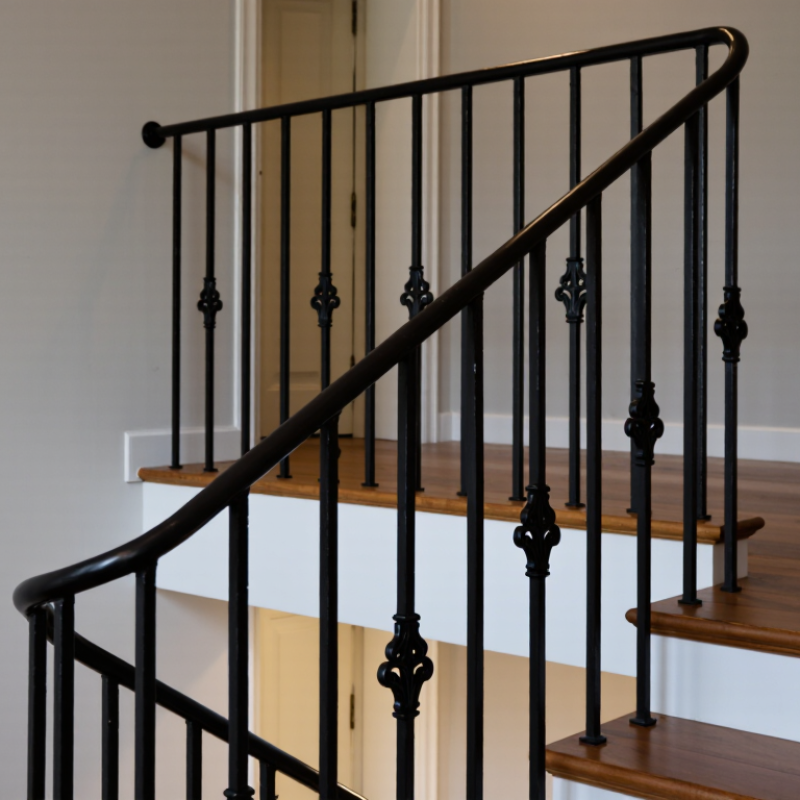
A wrought iron stair railing is a protective barrier installed beside stairs. It supports people while they climb or descend. It usually combines a top handrail, vertical balusters, posts, and decorative connections. The term can be confusing. Historically, wrought iron meant low-carbon iron shaped by heating and hammering. Today, many railings described as wrought iron are actually fabricated from mild steel. That distinction matters when evaluating strength, corrosion resistance, and authenticity.
Its core characteristics include rigidity, visual weight, and detailed craftsmanship. Vertical balusters help prevent dangerous gaps between the steps and handrail. Newel posts transfer movement and pulling forces into the stair structure. Curves, scrolls, and textured surfaces create a traditional appearance, but decoration should never weaken the frame. A railing can look substantial yet feel loose. That is a serious warning sign.
A durable finish normally includes surface preparation, a corrosion-resistant primer, and a protective topcoat. Small scratches can expose metal to moisture, especially near outdoor entrances. Regular checks should examine welds, fasteners, post movement, and rust beneath the handrail. Measurements also need careful attention. Stair angle, walking clearance, and handrail height must work together. Decorative priorities sometimes overshadow comfort, which is an avoidable mistake. The most reliable evaluation considers both appearance and everyday use.
| Data Dimension | Verified Description and Typical Information |
|---|---|
| Definition | A wrought iron stair railing is a handrail and guard system made from wrought iron or a visually similar low-carbon steel product, installed alongside stairs to provide support, guidance, and fall protection. |
| Historical Material | Traditional wrought iron is a tough, malleable iron material containing very little carbon and characteristic fibrous slag inclusions. It was shaped by heating and mechanical working rather than by casting. |
| Modern Material Terminology | Most new products described commercially as “wrought iron railings” are manufactured from mild steel because historically produced wrought iron is no longer widely available. The exact material should be confirmed in the product specification. |
| Primary Function | Its main functions are to offer a graspable handhold, help users maintain balance while ascending or descending, and form a protective barrier at open stair edges and landings. |
| Common Structural Components | A typical system includes a top handrail, vertical balusters or pickets, newel posts, mounting brackets or base plates, and connection hardware. Decorative collars, scrolls, and forged panels may also be included. |
| Manufacturing Methods | Traditional wrought iron can be forged, drawn, bent, punched, and riveted while hot. Modern steel railings are commonly cut, formed, welded, ground, and finished with protective coatings. |
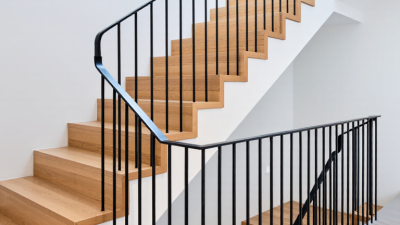
| Visual Characteristics | Typical visual features include dark metallic colors, slender profiles, vertical bars, curved scrollwork, geometric patterns, forged textures, and a combination of functional and ornamental details. |
| Strength and Rigidity | A properly designed and anchored railing can provide substantial resistance to normal hand forces and impact. Performance depends on the material, member size, connection quality, stair structure, and applicable building requirements. |
| Corrosion Resistance | Unprotected iron and carbon steel can rust when exposed to moisture and oxygen. Paint, powder coating, galvanizing, or a compatible primer-and-topcoat system can reduce corrosion and extend service life. |
| Indoor and Outdoor Use | These railings are commonly used indoors on residential and commercial stairs. Outdoor installations require weather-resistant detailing, suitable coatings, sealed joints, and regular inspection for rust or coating damage. |
| Typical Handrail Height | Many building codes place stair handrails approximately 34 to 38 inches (864 to 965 millimeters) above the stair-nosing line, although the required range varies by jurisdiction and building type. |
| Typical Baluster Spacing | Residential guard systems in many jurisdictions use spacing that prevents a 4-inch (102-millimeter) sphere from passing through openings. Local rules may differ, especially for child-care, commercial, or special-use buildings. |
| Installation Methods | Railings may be fixed to stair treads, stringers, floors, walls, or landings using welded plates, mechanical anchors, bolts, brackets, or embedded connections. The substrate must be strong enough to transfer the design loads. |
| Design Flexibility | Iron and steel can be fabricated into straight, angled, curved, scroll, and custom ornamental forms. This allows the railing to coordinate with traditional, industrial, transitional, and contemporary interior styles. |
| Maintenance Requirements | Routine care generally includes dust removal, cleaning with a mild detergent, checking fasteners and welds, touching up damaged coatings, and removing surface rust before it spreads. |
| Advantages | Key advantages include high design flexibility, strong visual presence, good rigidity when properly engineered, compatibility with custom fabrication, and the ability to be repaired or refinished. |
| Limitations | Potential limitations include considerable weight, susceptibility to corrosion without protection, the need for skilled fabrication, and possible code or accessibility issues if the profile, height, or spacing is incorrect. |
| Safety and Compliance | Before installation, verify local requirements for handrail height, graspability, guard height, opening dimensions, stair geometry, load resistance, returns, and continuity. Code requirements take priority over general dimensions. |
| Best Application | A wrought iron stair railing is well suited to projects that require a durable metal railing with customizable geometry, decorative detailing, and a traditional or architectural appearance. |